
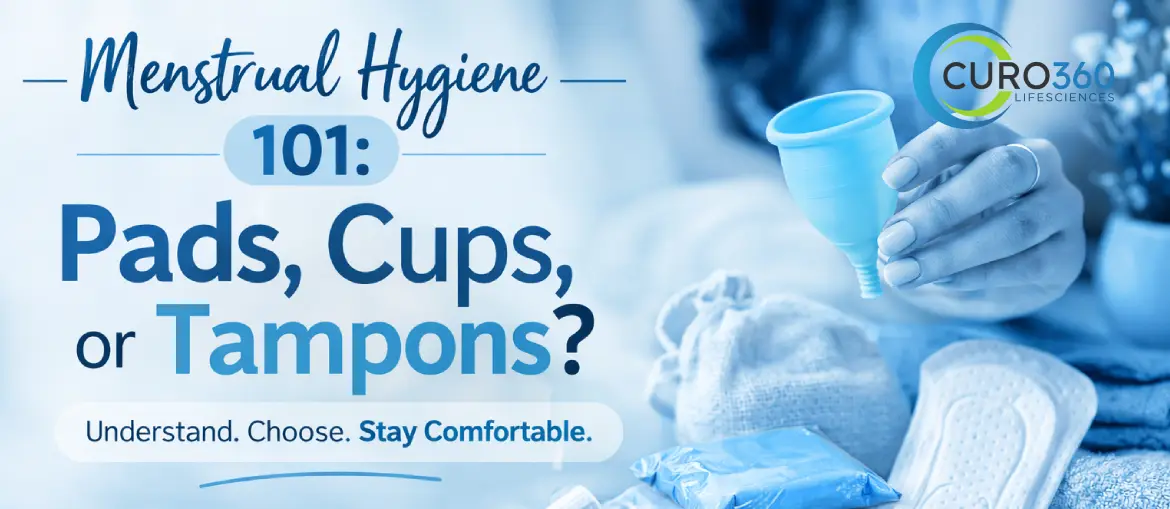
Menstruation is a natural process in every woman, but it is usually surrounded by confusion and uncertainty, more so when it comes to the right menstrual hygiene product. Today, there are many choices: sanitary pads, tampons, and menstrual cups, and it’s difficult to determine which option works best.
It is a guide that dissects the fundamentals of pads, cups, and tampons to make an informed decision regarding your body and life.
Understanding Menstrual Hygiene
Menstrual hygiene refers to maintaining cleanliness and comfort during your menstrual cycle. It is not only about controlling blood flow; it’s all about safeguarding your reproductive health, guarding against infection, and feeling great.
In modern times, menstrual hygiene is being discussed by more individuals than ever before, and the focus has switched from functionality to sustainability and personal preference.
Sanitary Pads: The Classic Choice
The most common menstrual product is the sanitary pad, especially among young girls and beginners. Menstrual blood is collected outside the body by applying absorbent papers with adhesive behind them. Sanitary pads come in a variety of sizes, thicknesses, and absorptions to accommodate light, medium, and heavy flows.
Pros:
- Easy to use: Pads can be used by beginners, and they do not need internal insertion.
- Variety: It comes in various sizes, overnights, and even biodegradable ones.
- Readily available: You will find it in practically all stores and pharmacies.
Cons:
- Not eco-friendly: Disposable pads generate more waste.
- May irritate: With continued usage, it may cause rashes or discomfort due to moisture and friction.
- Less discrete: Occasionally heavy or visible through clothing that is too tight.
They also come in handy, especially when there is heavy flow or when used overnight.
Tampons: The Discreet Option
Tampons are hollow tubes of cotton or rayon that are placed directly into the vaginal to absorb menstrual blood. They are small, not conspicuous, and suitable for an active person, especially a swimmer or a sports person.
Pros:
- Comfort and freedom: No bulky or outer feel; perfect for active lifestyles.
- Variety: Sold in various absorbencies (light, regular, super).
Cons:
- Requires insertion: It can be unpleasant or threatening to some.
- Frequent changing: Must be changed after 4 to 6 hours.
- Toxic Shock Syndrome (TSS): This is an uncommon but dangerous bacterial illness linked to improper or regular use.
When it comes to people who enjoy being mobile, tampons are great and have a less conspicuous product. Nevertheless, hygiene and frequent replacement are necessary to remain safe.
Menstrual Cups: The Sustainable Revolution
The menstrual cup is a reusable bell-shaped cup made of silicone that collects menstrual blood rather than absorbing it. It is fitted in the vaginal and forms a tight closure to avoid leakage.
Pros:
- Eco-friendly: Produces minimal waste as compared to disposable products.
- Cost-effective: Years of investment.
- Longer wear time: Can be worn safely between 8 and 12 hours.
- Odor-free: Since the blood is not exposed to the air.
Cons:
- Learning curve: Practice makes insertion and removal of items.
- Initial cost: A little costly initially.
- Cleaning required: The area should be cleaned between applications.
Menstrual cups will suit ecologically aware users as well as those people who must have a durable and low-maintenance product.
Choosing What’s Right for You
Your choice is influenced by things such as comfort, ease of use, lifestyle, degree of flow, and environmental values.
- For beginners: Pads are straightforward and non-invasive.
- For active individuals: Tampons offer flexibility and range of motion.
- For sustainability advocates: Menstrual cups are a sustainable and cost-effective alternative.
It is even interchangeable, after during the day and pads at night. You must be clean, comfortable, and confident.
The Bottom Line
Menstrual hygiene is entirely a matter of comfort, whether you continue using sanitary pads, switch to tampons to make it easy, or go with the revolution of menstrual cups. As awareness grows and our products get more comfortable, periods could end up easier, cleaner, and more empowering than ever.
It’s time to get past the stigma, recognize the resources available to you, and determine what suits you best.