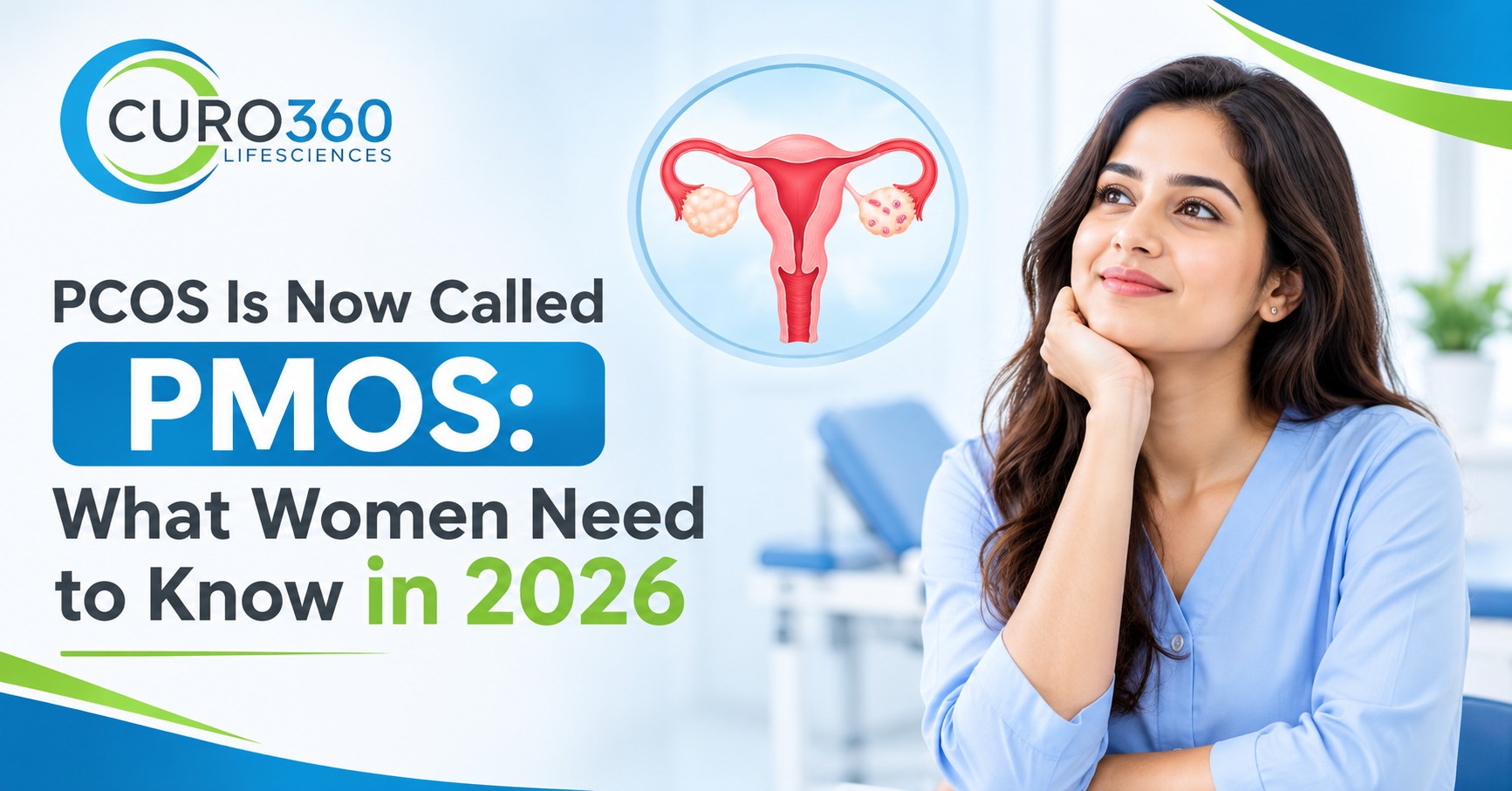
You may have come across posts saying that PCOS has a new name: PMOS. If you have been diagnosed with PCOS, then some new questions may arise. Is it a different condition? Do I need fresh tests? Should I change my medicines?
The first thing that you need to know is that PMOS & PCOS both mean the same condition. The name changed in May 2026, only to explain the condition more accurately. This does not mean that your previous diagnosis was wrong in any way.
What does the abbreviation PMOS stand for?
PMOS is short for Polyendocrine Metabolic Ovarian Syndrome.
It might sound complicated, so let’s break this down:
- Polyendocrine means that it involves varied hormone-related issues.
- Metabolic means how the body utilises energy, i.e. blood sugar as well.
- Ovarian involves the ovaries and egg release from the ovaries.
- Syndrome means that it consists of a set of signs and symptoms that can occur together.
You don’t need to remember every medical term. The bottom line is that this disorder can involve more than just menstrual issues.
Why Was the Name PCOS Changed?
PCOS stands for polycystic ovary syndrome. For years, the word “polycystic” led many people to believe that the condition was mainly about ovarian cysts. This caused confusion. Women could be dealing with irregular periods, facial hair, acne, or blood sugar problems, yet the name drew attention mostly to the ovaries.
The new title signals a broader recognition. Hormones, metabolism, reproductive health, and emotional well-being can all come into play. The development of the new name also included input from women affected by the condition as well as medical and scientific experts and patient advocacy groups.
Does Your Old PCOS Diagnosis Still Count?
Yes. A report says PCOS does not become invalid because a new name has been introduced.
The name change has not changed the existing international rules for diagnosis or treatment. You do not need another ultrasound or a new set of blood tests simply to replace “PCOS” with “PMOS” on your records. You will probably see both names for some time. Some doctors and websites may use “PMOS, formerly PCOS,” while others continue using the older term during the transition.
Are the Symptoms Different Now?
No. The symptoms have not changed with the name.
For some women, signs of PCOS might be noted with menstrual periods being infrequent. Other women will present with symptoms such as acne and unwanted hair growth. Some may recognise they have this condition when trying to conceive. Symptoms related to PCOS may include:
- Irregular periods or long gaps between periods
- Acne and oily skin
- More hair on the face or body
- Thinning hair on the head
- Difficulty getting pregnant
- Weight gain or difficulty managing weight
- Tiredness
- Dark & thicker patches of skin around the neck or armpits
- Anxiety or low mood
You may have only some of these symptoms. Having one does not automatically mean you have PMOS, because other health problems can cause similar changes.
Is an Ultrasound Enough to Confirm PMOS?
Ultrasound is not the final answer when it comes to examinations. Gynaecologists ask about menstrual cycles, medical background, symptoms, and blood test reports.
- Eggs are not released at all or are released irregularly
- There are signs of higher androgen activity, such as excess facial hair or relevant blood-test changes
- The ovaries have a particular appearance on assessment
An ultrasound is not always necessary. The approach is also different for teenagers, so a scan report should never be interpreted on its own.
Will You Need Different Treatment?
The new name does not mean that you now need a new set of medicines. Treatment depends on what you need help with. Some of the things that your doctor may discuss with you are listed below:
- Medicines to manage irregular periods.
- Treatment for acne or unwanted hair.
- Metformin for suitable patients with metabolic concerns.
- When there are issues with egg release, it affects pregnancy chances.
Just do not copy someone else’s prescription because both of you have the same symptoms.
Why Women’s Health Needs More Than Just Period Tracking?
It’s reasonable to keep track of your period, but it’s not everything that relates to your health. Remember that PMOS treatments may also involve monitoring blood levels of glucose and lipids, addressing sleep issues, emotional well-being and so on, even when you’re not planning to conceive.
Here are your next steps:
- Follow through with your prescribed treatment plan and attend any follow-up appointments you’ve made. Make sure to ask your physician about any new symptoms, as well as symptoms that show no improvement.
- In addition to healthy eating and exercise, your treatment plan should consider emotional health issues.
- The new name that has been given to this condition provides a clearer picture of what is going on. You will have to personally decide how to proceed from here; that is, ask questions about your symptoms and treatment plan.
Frequently Asked Questions
1. When did PCOS become PMOS?
The new name was introduced in May 2026 following an international process involving experts and women living with the condition.
2. Does PMOS mean a more serious form of PCOS?
No. PMOS is the updated name for the same condition. It does not describe a more serious stage.
3. Do I need to get diagnosed again?
You do not need repeat testing just because the name changed. Your doctor may recommend tests for other reasons during routine care.
4. Can women with PMOS get pregnant?
Yes. Some become pregnant without fertility treatment, while others need medical help. Having PMOS does not automatically mean you cannot conceive.
5. Should I stop my current PCOS medicines?
Do not stop or change prescribed medicines because of the new name. Treatment recommendations have not changed solely due to the renaming.